By Sebastien Wakefield, Technical Consultant at Auxilion
There's something about the recent wave of cyberattacks that I think every business leader should be paying attention to. It's not just the number of incidents we're seeing. It's how quickly a cyberattack can become a problem for the entire business.
The figures are difficult to ignore. Research reported by The Irish Times in November 2026 suggests that as many as two-thirds of Irish businesses experienced at least one cyberattack over the previous year.
And while every industry has something to lose, I think construction faces a particularly interesting challenge.
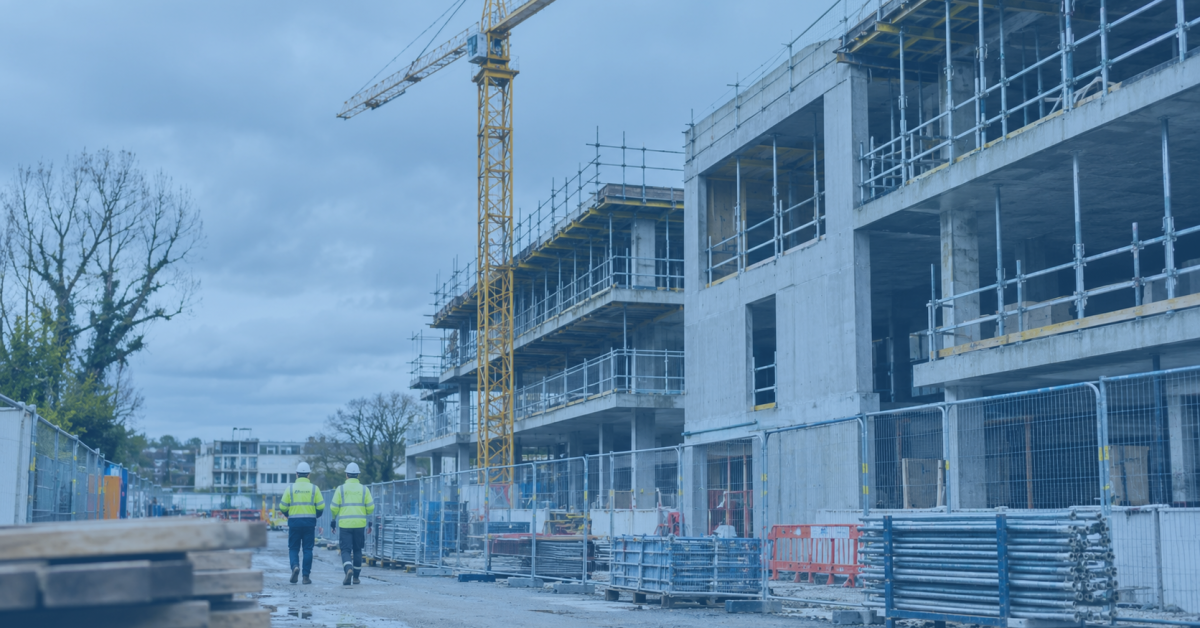
Consider how a typical construction business operates. You've got people working across different sites, subcontractors accessing shared information, project managers relying on cloud-based systems and finance teams processing supplier payments.
Now imagine those systems becoming unavailable on a Monday morning.
Suddenly, it's not just an IT problem. People can't access the latest project documentation. Communication between sites becomes difficult. Payments could be delayed. Work that should be progressing starts slowing down.
For an industry where project schedules and margins are already under pressure, that's a risk worth taking seriously.
Cybersecurity isn't just the IT department's responsibility
What concerns me is that cybersecurity can still be viewed as something for the IT department to manage.
Of course, technical protection matters. But I would argue that the bigger question is whether the business itself is prepared for a disruption.
Do we know which systems are critical to keeping projects moving? Who has access to sensitive information across our sites and supply chain? If something goes wrong, how quickly could we recover?
These aren't particularly technical questions. They're business questions, and they deserve attention at leadership level.
Ireland's National Cyber Security Centre has highlighted the growing risks associated with cybercrime and interconnected supply chains. That should resonate with construction companies, where collaboration between different organisations is part of everyday operations.
Regulation is catching up, but should businesses wait?
There's also the regulatory picture to consider.
The EU's NIS2 Directive places greater emphasis on cybersecurity risk management, accountability and resilience across critical sectors.
Ireland has yet to complete its transposition into national law. In October 2026, the Government confirmed that the National Cyber Security Bill was still being drafted, with completion targeted before the end of the year.
Not every construction company will fall directly within NIS2's scope. But those working within critical infrastructure supply chains may face increasing expectations around how they protect systems and information.
My view is that businesses shouldn't need a regulatory deadline to start asking whether their IT environment is resilient enough.
A different conversation for 2027
As we look towards 2027, I'd encourage construction leaders to think about cybersecurity in the same way they think about other operational risks.
Not just whether the right technology is in place, but whether the business can continue operating when something goes wrong.
That means understanding vulnerabilities, reviewing access to critical systems and making sure recovery arrangements are practical and tested.
At Auxilion, we work across cybersecurity, governance and compliance, cloud infrastructure, backup and disaster recovery, and managed ICT services. These are all important parts of building a more resilient organisation.
Because ultimately, the question isn't simply whether your business could experience a cyberattack.
It's whether your next project deadline could survive one.
If you're reviewing your organisation's IT resilience ahead of 2027, get in touch at hello@auxilion.com.
Frequently asked questions
How common are cyberattacks among Irish businesses?
Research published by Gallagher and the Centre for Economics and Business Research in July 2026 found that 66% of the 250 Irish businesses surveyed had experienced at least one cyberattack in the previous 12 months.
Why does a cyberattack matter so much to a construction company?
Because it quickly becomes an operational problem. If systems become unavailable, project documentation can become inaccessible, communication between teams slows down and payments may be delayed, with potential consequences for deadlines, budgets and client relationships.
Is cybersecurity just the IT department’s responsibility?
No. Having the right security measures in place is essential, but protecting systems and keeping a business operational aren’t quite the same thing. Leadership should know which systems are critical to project delivery, whether access to sensitive information is properly managed across employees, sites and subcontractors, and whether there is a realistic recovery plan.
What should construction leaders consider ahead of 2027?
Looking beyond prevention to what happens when something does go wrong. Which systems need to be restored first? How quickly can teams resume work? And are recovery arrangements genuinely fit for purpose?
Which Auxilion services relate to this?
Our expertise spans cybersecurity, governance and compliance, cloud and hybrid infrastructure, backup and disaster recovery, and managed ICT services.