
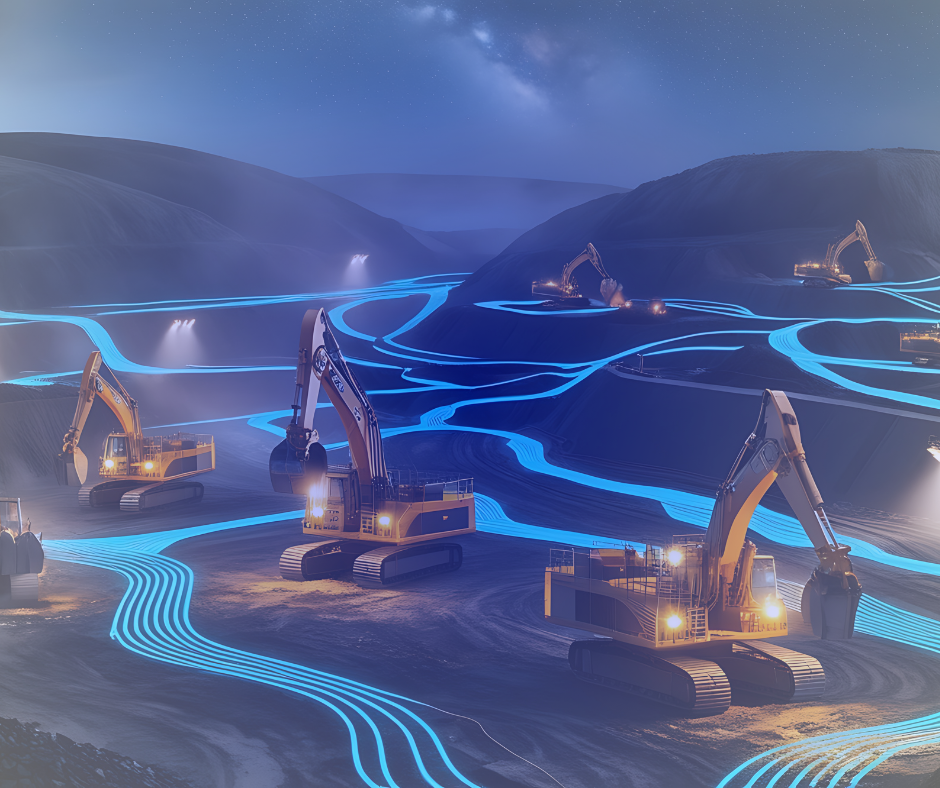
Haul trucks, drills, sensors, planning tools: everything in a modern mine runs on data. When networks falter or systems stall, operations bleed minutes and money. Auxilion provides managed IT services for the mining industry that keep sites connected, software stable, and teams supported. Your people focus on tonnes and safety; our team keeps the technology steady.
Who this helps
- Exploration and juniors needing fast, safe foundations without heavy headcount.
- Active mines seeking predictable uptime across pit, plant, and port.
- Multi-site companies standardising toolsets and support across regions.
- Mining contractors with mixed fleets and complex integration needs.
Commodity cycles move quickly. A reliable IT backbone stops small glitches becoming production losses.
Mining IT reality: OT meets IT, far from town
Mines are harsh, remote, and noisy, for networks as much as machinery. Typical constraints include:
- Patchy connectivity across pits, portals, and process plants.
- Operational Technology (OT) running SCADA, PLCs, and historian databases alongside corporate systems.
- Multiple vendors (fleet, fleet guidance, FMS, fuel, weighbridges) that rarely align by default.
- Data sprawl from sensors, drones, and production reporting tools.
- Thin on-site IT stretched across shifts, shutdowns, and call-outs.
Managed services bring order and clear ownership, from the control room to the cloud.
What Auxilion runs for mining companies
End-to-end managed services shaped for pit, plant, and head office:
- 24/7 monitoring & response: telemetry across servers, apps, networks, and edge gateways; early alerts, root-cause fixes, post-incident notes.
- Network management: rugged Wi-Fi, point-to-point links, MPLS/SD-WAN, QoS for fleet guidance and safety systems.
- Cybersecurity operations: identity controls, endpoint protection, email hardening, SOC-style threat detection for both IT and OT.
- Cloud & edge platforms: Azure/AWS with on-site edge nodes for low-latency workloads; tidy identity and spend control.
- Data protection: immutable backups, tested recovery, retention rules for data from planning to payroll.
- Application care: FMS, mine planning, maintenance CMMS, weighbridge, ERP, GIS; patching cadence and integration health.
- Device lifecycle: tablets, radio-linked handhelds, kiosk PCs, truck cab hardware; encryption, inventory, swap-outs.
- Service desk & field support: patient, practical, mining-aware; remote first, boots on ground when required.
- Consulting & roadmaps: digital plans, vendor management, and evidence packs for audits and board reporting.
Table — Operational need → Solution → Outcome
|
Operational need |
Managed solution |
Outcome on site |
|
Stable pit & plant comms |
SD-WAN, mesh Wi-Fi, spectrum checks, QoS |
Fewer dropouts, smoother HMIs and FMS |
|
OT–IT separation |
Network segmentation, firewalls, jump hosts |
Safer control networks, clear audit trails |
|
Predictable data flows |
EDI/API monitoring, retries, queue health |
Reliable feeds for reporting and dispatch |
|
Backup you can trust |
Immutable stores, timed restore drills |
Recovery you can prove, not just hope for |
|
Cloud without sprawl |
Guardrails, tags, budgets, SSO |
Lower costs, simpler access control |
|
Fewer repeat incidents |
Problem management, RCA, change windows |
Ticket volumes trend down, not sideways |
Networks that survive dust, distance, and dozers
Connectivity rules production. We harden the fabric:
- Pit coverage: directional APs, repeaters, correct antenna gains, and channel planning that survives shift changes and moving faces.
- Yard and workshop: roaming tuned for scanners and tablets; VLANs that keep guest access away from plant control.
- Backhaul: SD-WAN across microwave, satellite, or fibre with intelligent failover; bandwidth reserved for safety and control before dashboards.
- Seasonal reality: monsoon and winter adjustments; weather-aware monitoring to pre-empt weak links.
Result: fewer gaps in fleet telemetry, faster dispatch updates, calmer supervisors.
OT/SCADA security without choking production
Control networks are sensitive. Changing them carelessly risks breakages. We protect them gently:
- Segmentation by design: OT zones, DMZs, and one-way data diodes where required.
- Access by need: jump hosts, bastion accounts with time-boxed privileges, multi-factor for engineers.
- Patch discipline: vendor-supported schedules with rollback plans; maintenance windows aligned to shutdowns.
- Monitoring that matters: anomaly alerts on PLC/HMI comms, historian writes, and configuration drift.
- Forensics ready: logs synchronised and retained; evidence you can hand to regulators or insurers.
Production stays safe; auditors see clear control.
Cloud and edge for mines that can’t wait
Latency and link quality shape architecture. We place workloads where they run best:
- Edge nodes near plant control for historian caches, local analytics, and survivable HMIs.
- Cloud tiers for reporting, planning, collaboration, and cross-site analytics.
- Identity first: single sign-on, conditional access, clean off-boarding for contractors.
- Cost hygiene: budgets, tags, alerts; sandbox vs. production separation so test rigs don’t eat cash.
- Resilience: cloud-based disaster recovery for ERP or planning, with service RTO/RPO targets written down.
You keep speed on site and scale in the cloud- not either/or.
Data to decisions: from raw signals to useful action
Mining generates torrents of events: tonnes, grades, temps, pressures, delays. Most of it goes unused. We help turn data into decisions:
- Pipelines that collect from FMS, plant PLCs, lab results, and maintenance systems into a governed lake.
- Quality checks and timestamps that line up shifts, benches, and circuits.
- Dashboards that operators actually read: short, visual, current.
- Predictive alerts for bottlenecks: oversize in the crusher, sagging conveyor performance, rising pump amps.
- Reconciliation: align truck counts, mill feed, and shipment weights; find the leaks before the month ends.
It’s not buzzwords. It’s fewer surprises and tighter efficiency.
Asset tracking, fleet care, and parts that arrive on time
Unplanned downtime hurts margins. We help maintenance teams win small battles daily:
- CMMS integration with FMS and telemetry for meter-based work orders.
- Condition checks: vibration, heat, pressure, and oil analysis into one picture.
- Spares visibility: lead times flagged early; reorder points tied to real consumption, not hopeful averages.
- Tablet workflows that work offline and sync well; mechanics write once, not twice.
Remote operations and workforce support
People need help at odd hours and locations:
- Service desk that speaks mining language
- Field swap-outs: spares at site; simple guides in the drawer next to them.
- Roster-aware coverage: higher staffing during night shifts, shutdowns, and blasts.
A calm, available support line is worth more than one engineer on speed-dial.
Compliance, safety, and evidence on hand
Board, insurers, and regulators want proof, not promises:
- GDPR and information handling for HR, medicals, and contractors.
- Change control that maps to GxP-style discipline if needed for processing plants.
- ISO 27001-aligned policies; NIS2 readiness for critical infrastructure operators in relevant regions.
- Safety systems: breathers, proximity alerts, fatigue tools — integrated and monitored like any other critical app.
When questions come, screenshots and logs answer them.
Vendor sprawl under control
Fewer invoices, clearer owners:
- Tool register: versions, owners, support contacts, renewal dates.
- Integration map: who talks to whom, and how brittle that link is.
- Commercial tidy-up: cut shelfware, consolidate contracts, and right-size licences.
You get time back and reduce surprises at the month-end.
Implementation path that respects production
- Discovery: inventory, pain points, and a list of risks.
- Stabilise: backups verified, MFA enforced, worst Wi-Fi dead zones fixed, noisy alerts silenced.
- Harden: segmentation tweaks, runbooks, and restore drills with screenshots and timestamps.
- Optimise: reduce tickets, clean licences, guardrails in the cloud.
- Modernise: data lake patterns, useful dashboards, planned OT upgrades.
- Review: quarter by quarter, with metrics, not adjectives.
No gold-plating. Just steady better.
ROI miners can point at
- Fewer stoppages: dispatch and plant keep flowing; tickets drop rather than repeat.
- Lower cost to serve: predictable monthly services; less overtime on “IT fires”.
- Improved throughput: stable comms and systems reduce rework and idling.
- Better safety posture: alerts function, evidence exists, access stays tight.
- Cleaner audits: policies current, controls tested, logs in one place.
Technology stops being chaotic background noise and becomes part of how companies plan and grow.
FAQs
How do managed IT services reduce downtime in mining operations?
By watching the right signals and fixing small faults early. Continuous monitoring across networks, servers, and apps highlights weak links before they become stoppages. Prioritised bandwidth for control and fleet guidance keeps critical traffic moving even when links degrade. Regular restore drills ensure recovery works under pressure. The practical outcome is fewer missed scans, faster dispatch updates, and steadier plant performance, all of which add up to more predictable output.
Can Auxilion secure OT networks without disrupting production?
Yes. Changes follow vendor-supported paths and are timed with your maintenance windows. We keep OT and IT segmented, add controlled jump hosts for engineering access, and use alerting that watches for abnormal PLC or HMI behaviour. Patching happens with rollbacks ready. Logs and evidence are retained so audits are straightforward. Production remains the priority; security is fitted around that reality rather than imposed on it.
What does “cloud for mines” actually mean in practice?
Not everything moves off site. Low-latency workloads sit on edge nodes; analytics, reporting, and collaboration live in the cloud. Identity gives users one login, conditional access protects sessions, and budget tags prevent cost drift. Data flows from FMS, plant, and labs into a governed store with retention rules. The balance keeps local control fast while giving leadership cross-site visibility and scale when needed.
How fast can a multi-site miner see benefits from managed services?
Quick wins usually arrive in weeks: verified backups, enforced MFA, cleaner Wi-Fi in problem zones, and sensible alerting. Ticket volumes fall as repeat issues are addressed. Bigger changes (data lakes, OT segmentation, SD-WAN rollout) are phased to match shutdowns and seasonal weather. Value is reported each quarter using uptime, incident rates, restore times, and cost trends, so progress is visible rather than wishful.
Why mining companies choose Auxilion
- Ireland-based provider with global experience across heavy industries and remote site support.
- Engineers who understand FMS, CMMS, GIS, ERP, weighbridge links, and the quirks of plant control.
- Security that respects production: segmented designs, monitored access, evidence you can hand to auditors.
- Cloud know-how paired with rugged edge patterns for pits and plants.
- A service culture built on clear runbooks, steady response, and useful reporting.
Ready to see steadier output with fewer IT headaches?
Let Auxilion manage the IT, so your team can focus on safe, profitable mining. Tell us where it hurts: pit comms, plant apps, data quality, or backup confidence. We’ll map quick wins and shape a plan that improves operations without getting in the way.
Related Articles
- What Are Managed IT Services: Definitions, Types & Benefits
- Managed IT for Construction
- Managed IT for Energy Industry
- Managed IT for Oil & Gas
- Managed IT for Engineering Companies